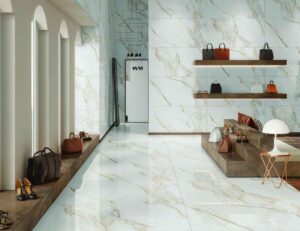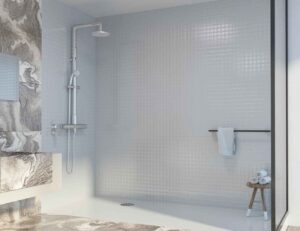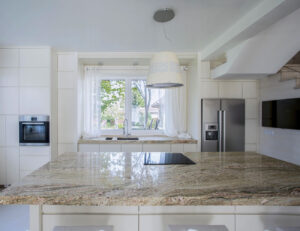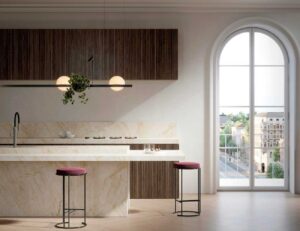



In the solid surface vs quartz comparison for kitchen countertops, solid surface emerges as the premium choice for custom design, superior hygiene, and seamless surfaces. Composition, maintenance, and design versatility create substantial differences between these materials, including granite which is losing ground in 2026.
GP Design, a workshop with over 45 years of experience crafting Solid Surface Krion and Corian, knows the real advantages and limitations of each kitchen countertop solution. Here’s a complete comparison to help you choose with confidence.
Composition and Structure: Solid Surface vs Quartz
Solid Surface is a homogeneous composite made from natural minerals (aluminium trihydrate derived from bauxite) and high-resistance acrylic resins, with a compact, completely non-porous structure. Colour, texture, and technical properties remain identical throughout the entire thickness, enabling fabrication techniques impossible with other materials.
Engineered quartz combines 90–95% ground natural quartz with polyester resins and pigments, producing rigid slabs with high surface density. Granite, a natural volcanic stone, has an inherently porous granular structure that limits its versatility. The key difference in the solid surface vs quartz comparison is homogeneity: only solid surface can be worked as a continuous element without alterations.
Durability and Maintenance: Solid Surface vs Quartz Compared
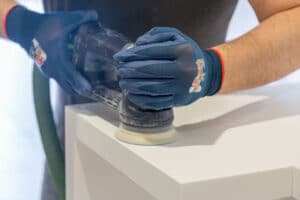
Comparing solid surface vs quartz on durability, quartz wins in hardness with a Mohs scale rating of 7. However, solid surface holds an exclusive advantage: full repairability. Scratches and marks can be removed by sanding, restoring the original surface without replacing the piece.
Granite requires periodic sealing against its natural porosity. Quartz, while non-porous, suffers irreversible damage from thermal shock caused by hot pots. Those evaluating solid surface vs quartz for maintenance will find solid surface more practical: water and mild soap are all that’s needed for daily cleaning.
Why Granite Is Losing Ground in 2026
Granite has long been synonymous with prestige in Italian kitchens, but in 2026 demand has dropped significantly in favour of higher-performing materials. Natural porosity is the main limitation: without regular waterproofing, liquids such as wine, coffee, and lemon juice penetrate the surface, creating stains that are difficult to remove.
Compared to solid surface vs quartz, granite presents significant practical disadvantages: always-visible joints between slabs, chip repairs that require full replacement, and heavy weight that complicates installation and transport. Quartz and solid surface have progressively replaced granite thanks to superior hygienic and functional performance.
Design and Customisation: The Solid Surface Advantage
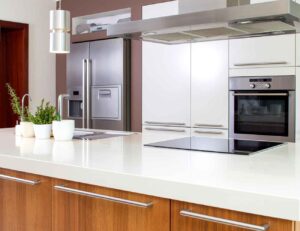
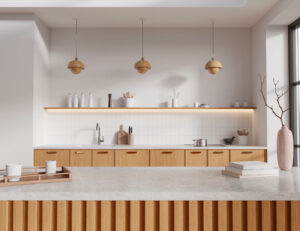
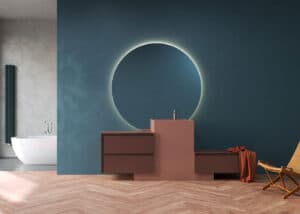
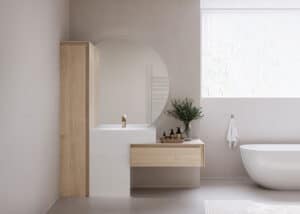
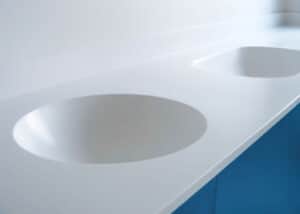
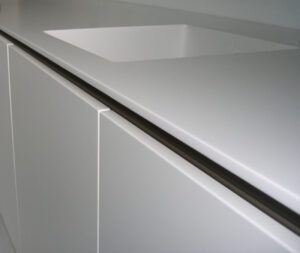
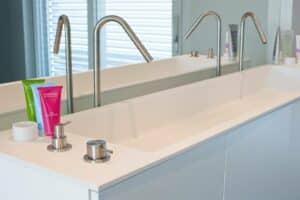
Analysing solid surface vs quartz from a design perspective, solid surface offers unmatched creative possibilities. Thermoformability allows curved shapes, soft edges, and continuous surfaces without joints. An integrated sink eliminates every corner where dirt and bacteria could accumulate.
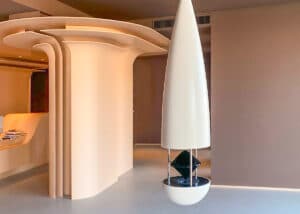
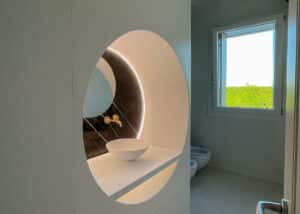
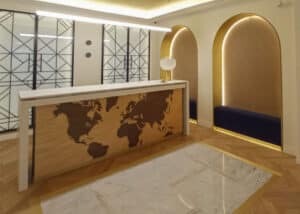
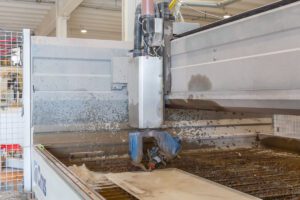
GP Design uses CNC machining centres and specialised ovens for thermoforming and sublimation of Solid Surface. This production capability enables curved countertops, complex geometries, and custom furnishings impossible with quartz or granite — ideal for contemporary designer kitchens.
Hygiene and Food Safety in the Solid Surface vs Quartz Comparison
Hygienic properties are decisive when evaluating solid surface vs quartz for the kitchen. Solid Surface possesses natural bacteriostatic properties from its mineral composition, preventing microorganism growth without chemical additives. It is also used in operating theatres and laboratories.
Quartz offers good hygienic performance, but visible joints between slabs can harbour bacteria. Granite, with its porosity, is the least hygienic option. For those choosing between solid surface vs quartz with food safety as a priority, solid surface guarantees the most hygienic surface available.
FAQ – Frequently Asked Questions About Solid Surface vs Quartz
How much does a Solid Surface kitchen countertop cost compared to quartz?
Solid Surface ranges from €400 to €800/sqm for standard installations; quartz starts from €200/sqm. The repairability of solid surface offsets the higher initial cost over the long term.
Does Solid Surface withstand heat from pots?
A trivet is needed to prevent marks from direct heat. Any thermal damage can be repaired by sanding, unlike quartz where the damage is permanent.
Can Solid Surface and quartz be combined in the same kitchen?
Yes: solid surface for the integrated sink and preparation area, quartz for cooking zones. GP Design creates optimal combined solutions.
Conclusion: Choose the Right Material for Your Project
In the solid surface vs quartz comparison, the choice depends on your design priorities. Solid Surface excels in customisation, hygiene, and repairability. Quartz offers maximum surface hardness. Granite, on the other hand, presents significant functional limitations in 2026.
GP Design in Ponte di Barbarano offers personalised consultations to identify the ideal material for every kitchen project. Contact us to discover the possibilities of Solid Surface and experience the quality of Krion and Corian materials first-hand.
Read also: Corian Bathrooms: Luxury Design Ideas for 2026
Discover the bathroom furniture by SetBianco by GP Design.